Top / 05 Modern era
When a sacred site of the Edo period became a hill station
In the Meiji era, Nikko internationalized in an unexpected way. Foreign visitors were drawn to its cool mountain climate, embassies from around the world built villas along Lake Chuzenji, and an imperial villa rose at Tamozawa. It all began with one decision by a shrine musician who had just been dismissed from his post.
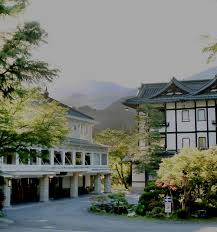
The origin of the Kanaya Hotel
Kingoro Kanaya, founder of what's considered Japan's first Western-style resort hotel, was originally a court musician at Toshogu, playing the sho (a bamboo mouth organ). The turning point came when the missionary Dr. James Curtis Hepburn — remembered today for the romanization system that bears his name — visited Nikko and found nowhere to stay. Feeling for him, Kanaya invited him to lodge at his own home.
That act got Kanaya expelled from his position as a shrine musician. But Hepburn was so impressed by the hospitality that he urged Kanaya to open an inn for foreign travelers. In 1873, at age 21, Kanaya converted the former residence of a shrine musician into the "Kanaya Cottage Inn" — known among foreign guests at the time as the "Samurai House." The hotel moved to its current site in 1893. What began as one man losing his position ended up as the starting point of Japan's modern resort culture.
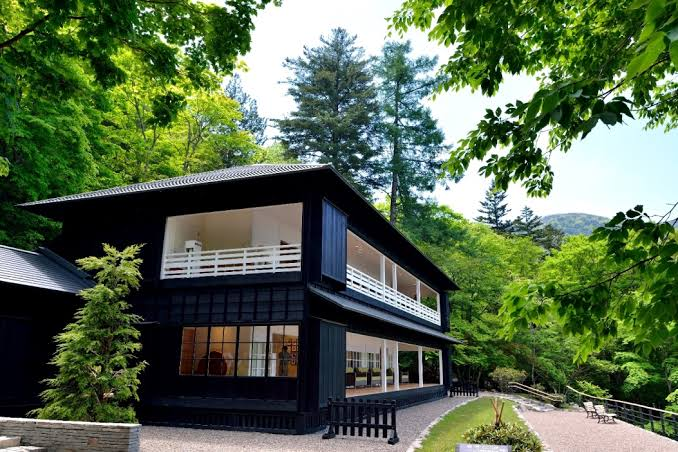
Lake Chuzenji
At 1,269 meters above sea level, the shores of Lake Chuzenji offered Western diplomats a welcome escape from Tokyo's brutal summer heat. The trailblazer was the British diplomat Ernest Satow, who first visited Nikko in 1872 and fell for it immediately. In 1875 he published an English-language guide to Nikko that introduced it to the wider world. In 1896 he built his own villa on the lakeshore — the origin of what is now the British Embassy Villa.
Others followed his lead, and from the mid-Meiji era through the early Showa period, one embassy villa after another rose along the lake, turning it into a cosmopolitan summer resort. The Italian Embassy Villa, built in 1928, was designed by Antonin Raymond, an American-born architect who would go on to become one of the pioneering figures of modernist architecture in Japan. Its exterior, finished in unpeeled cedar bark, boldly draws on materials from the surrounding mountain landscape. Both villas are now preserved as memorial parks, letting visitors step directly into that earlier era.
Tamozawa Imperial Villa
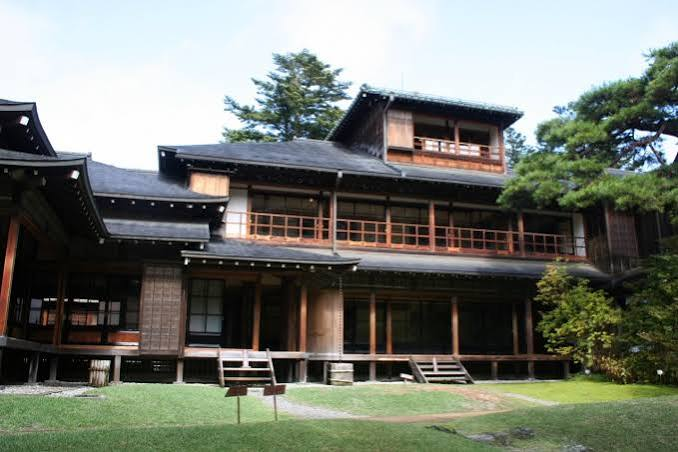
Completed in 1899, Tamozawa Imperial Villa is one of the largest wooden buildings still standing in Japan: 106 rooms across roughly 4,471 square meters. But this wasn't built from scratch.
The section housing the imperial residence and dining hall was relocated from a building originally built as the Edo residence of the Kishu Tokugawa family, which later became part of Akasaka Palace. The section housing the empress's quarters reused a wealthy local family's existing villa on the same site. In other words, Tamozawa Imperial Villa is a composite of three buildings from three different origins: an Edo-period daimyo residence, a Meiji-era imperial structure, and a local businessman's villa. A major expansion during the Taisho era brought it to its present form by 1922. Once you know it wasn't drawn up as a single unified design, the differences between rooms become part of what makes a visit interesting.
Next: the craft and cuisine of Nikko →